
Launching a VR experience at Āraiši Ezerpils Archaeological Park
Working with cultural heritage organisations in Europe, we are continuously learning about the diverse range of organisations, and about the capacity of smaller museums to keep up with the latest digitisation and visitor engagement opportunities.
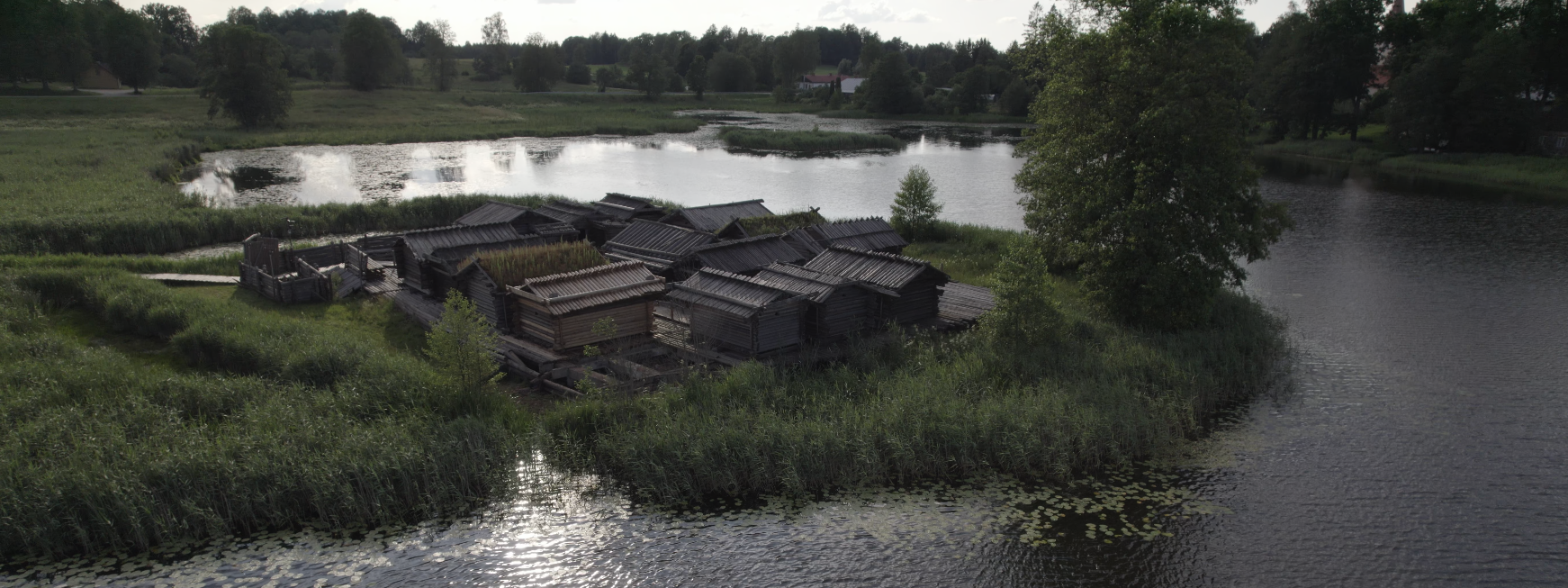
Especially for smaller museums and cultural heritage organisations, adoption of immersive technologies is often desirable, as they can add significant educational value to the exhibit. A digital offering can also help the museum present itself as a contemporary, forward-looking venue. Unfortunately, there are constraints at play.
For example, XR applications for museums tend to be quite custom-made, requiring a decent budget. Being able to create a design brief for subcontractors needs at least some expertise in the area of XR, and there are often technical challenges in more rural areas and open-air museums, such as internet connectivity.
XR technology can be tricky to install and maintain, so there can be a reservation about it taking up too much maintenance time, and not really fitting in with the rest of the museum infrastructure. We have also seen that museums with more folkloric collections and ethnographic exhibits find it harder to fit into larger funding schemes.
Our recent collaboration with Āraiši Ezerpils Archaeological Park in Latvia and technology developers XR Ireland – part of the EU-funded VAARHeT project – showed how user-centered design and interdisciplinary teamwork can bridge the gap between research and real-world museum experiences.
User research: Reading the room
A vital key to being able to apply what was learned and developed during the research and innovation project was an empathetic approach to getting to know the museum itself and the needs of staff and visitors at an early stage, well before anything was designed or built.
During the initial planning, we had discussions about the different priorities in the team – the museum’s top priority was an extension of the project results into daily operations in order to improve the visitor experience. For the tech developers, implementation and testing was top of mind. For us at XYZ Technical Art Services, that meant filling the role of the advocate and diplomat, which is often where you will find UX designers, reconciling the requirement of the project, of the technology, and of the client.
This is really where we developed the most value already early in the project. Although we were constrained by the technologies we had to implement, we further refined the use cases, identified obstacles to technology adoption, and also sketched out business cases for further projects and collaborations. We conducted structured interviews, created design personas, user requirements documents, user flows and journey maps to an extent that usually is not part of an XR design brief – but can be so valuable for business development.
Being part of a funded project really allowed us and our partners to get deeper into these discussions, to try new technology, and to rigorously test its value to the museum visitor. For clients who are more focussed on design and development of applications and experiences, we still include a short form of this initial stage, so that XR is not just “another project”, but becomes a relevant part of the museum.
User testing: Collecting feedback (and then doing something about it!)
In an ideal scenario, we will have roughly three design phases – first, user research and definition of product requirements, then development, testing, and then, iteration of the prototype based on user test results. But, as is often the case with innovation or R&D projects, the funding comes to an end, and the iterations leading to a fully-fledged commercial or at least presentable product don’t happen.
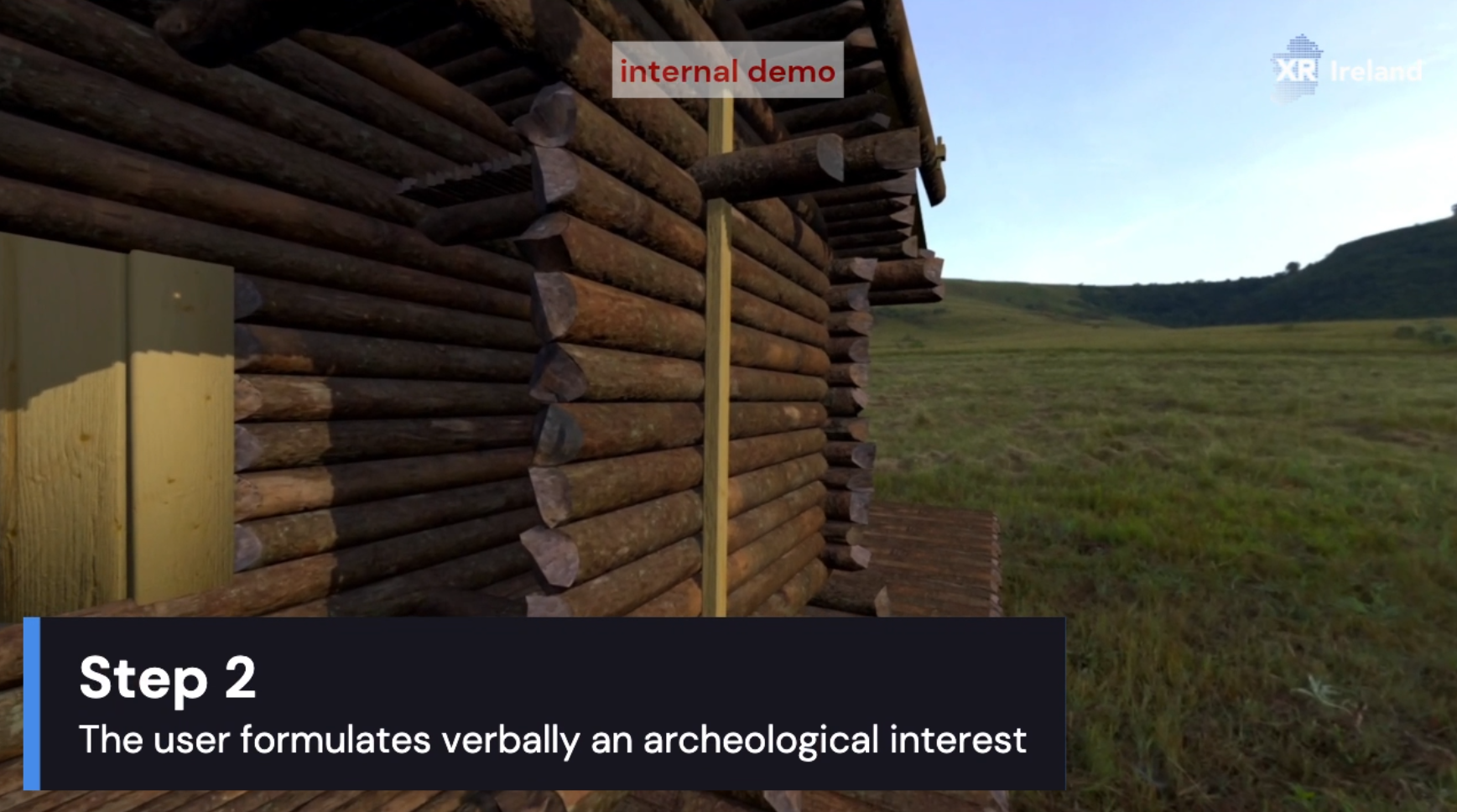
During the user testing for VAARHeT, it became clear that the VR experience had a high net promoter score, even for museum contexts. Audiences liked the atmosphere, the sense of presence, and the clear presentation of factual information about the buildings of the lake settlement. We also gathered feedback on the interaction mechanics and content. So there was a lot of information, but the prototypes were not elaborated to a final standard.
Pushing it over the line
At the end of the Horizon project, Āraiši were able to find a small additional budget and hired us to carry out the final improvements. We made sure to include what we had learned from the user research so that the new version provided the most value for money. The main improvements requested by the museum were better graphic fidelity, more accuracy in representation of the landscape, a more conventional UI, and localisation to Latvian and English. We ported the experience from its research prototype in Unity and Meta Quest to Unreal Engine and a Pico headset.
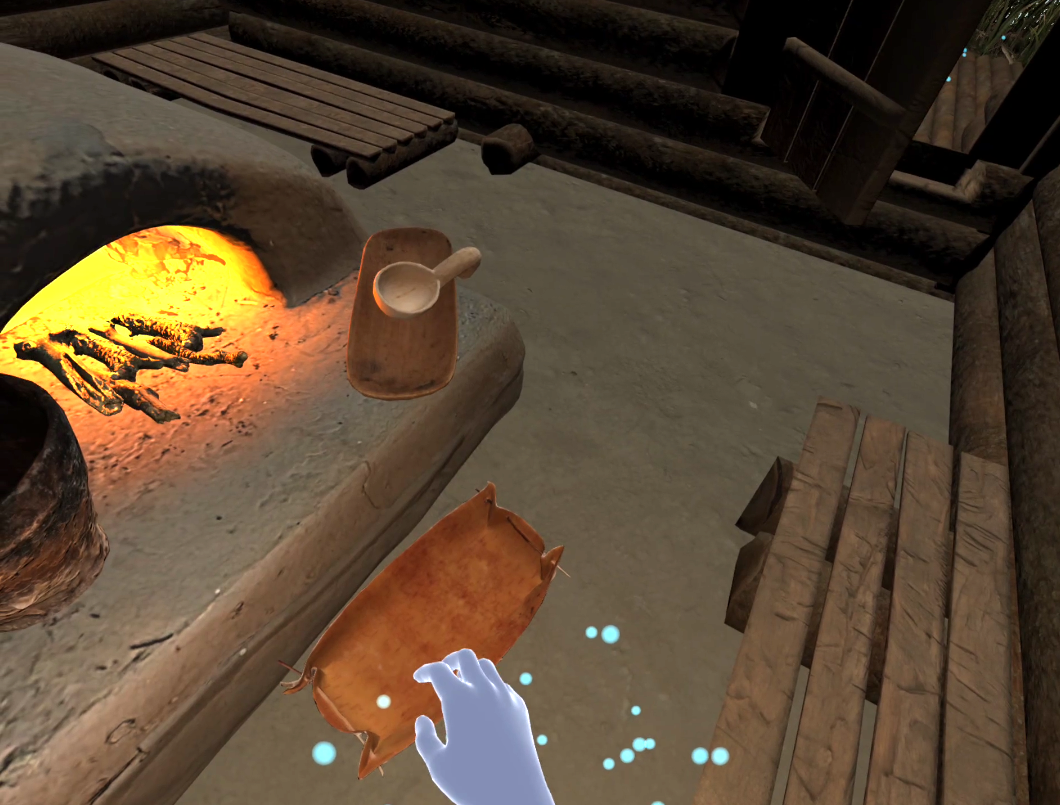
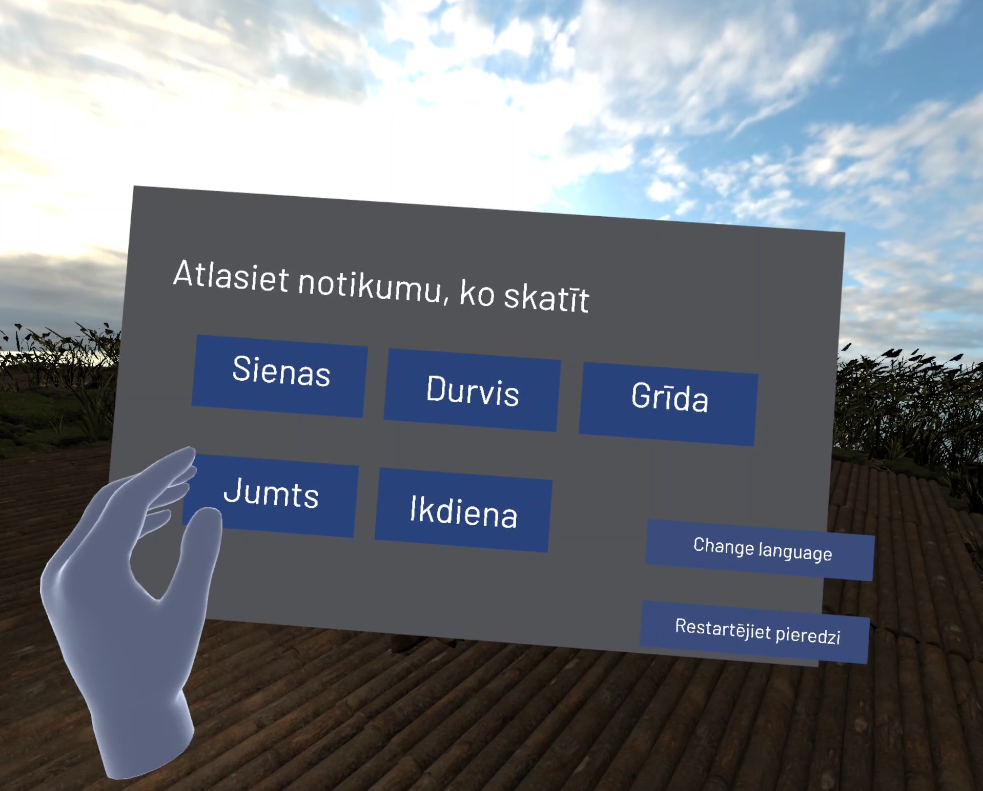
We were really only able to do this because of the foundations laid during the VAARHeT project. Apart from knowing where to concentrate our efforts, we also had 3D assets we captured on our visit to Latvia, as well as a 3D model built in collaboration with the archaeologists at the museum. We had a very committed team, and a client who was seeing the potential of engaging with innovation for networking and collaborations in the future.
For both the museum and ourselves as a creative industries SME, having the rich user research data from VAARHeT has allowed us to build on our collaborative relationship to bring the prototype to a commercial standard that meets the high expectations of a museum audience.